A sharp clicking sound appears when you turn out of a parking space, then disappears as the steering wheel straightens. Another day, you feel a shudder while accelerating.
Both symptoms raise questions about the CV axles, but they don't always point to the same joint or even the same system. Noticing when the noise or vibration appears gives an inspection a stronger starting point.
What CV Axles and Their Joints Do
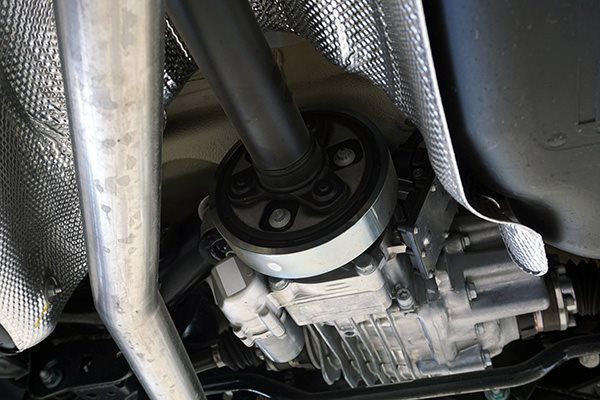
A constant velocity axle transfers power from the transmission or differential to a driven wheel while allowing suspension and steering movement. Many front-wheel-drive vehicles use an inner and outer CV joint on each front axle. AWD vehicles also use joints in other driven axle locations. Flexible rubber boots protect the joints and hold special grease inside. The exact arrangement depends on the drivetrain and suspension design.
The outer joint accommodates large steering angles, while inner joints typically allow changes in axle length as the suspension moves. Wear develops when protective grease escapes, dirt enters, or internal contact surfaces deteriorate. A damaged boot found during routine maintenance often presents a chance to correct a problem before the joint starts making noise. Once the joint itself is damaged, replacing the boot alone won't restore the worn surfaces.
Clicking During Turns Often Points to an Outer Joint
Repeated clicks or pops during a slow, tight turn are familiar signs of outer CV joint wear. The sound often becomes clearer when you apply light power with the steering wheel turned. In a worn joint, internal surfaces no longer carry the load evenly, allowing a rhythmic noise as the axle rotates. The sound may be louder in one turning direction, but that isn't a reliable way to identify the failed side by itself.
Did the clicking begin after a torn boot was discovered or after the vehicle struck a curb? Those details help narrow the inspection. We examine the joints, boots, clamps, and nearby components while considering how the sound changes under load. Steering stops, suspension joints, and wheel hardware can create similar popping noises. A road test combined with a physical check is more dependable than replacing an axle based on sound alone.
Vibration Under Acceleration Tells a Different Story
Some inner CV joints create a shudder or vibration when they wear, particularly under acceleration. It often fades when you ease off the throttle, unlike a tire imbalance that tends to follow road speed regardless of engine load. The vibration may travel through the floor or steering wheel. However, worn engine mounts, bent wheels, driveshaft faults, and certain transmission problems also create load-related shaking.
A controlled test compares acceleration, coasting, and steady-speed driving. Where safe and permitted, we check axle movement and the condition of related mounts and driveline components. If the vibration started right after wheel or axle work, mention that timing. Incorrect installation, damaged hardware, or a preexisting mount issue could be involved. The repair should match the confirmed cause, not the first part suggested by a symptom chart.
Torn Boots and Lost Grease Speed Up Wear
A CV boot is more than a dust cover. It contains lubricant and keeps water, sand, and road grit away from the joint's precision surfaces. A split boot allows grease to spray onto nearby suspension parts while contamination works inward. On coastal roads, moisture and debris make an exposed joint especially vulnerable. Early inspection of a damaged boot can prevent the joint from wearing far enough to click.
Look for thick grease around the inside of a wheel, but don't reach into moving components or assume every dark stain comes from the axle. An oil leak, damaged strut, or other source leaves different traces. When the joint remains clean and unworn, an approved boot repair may be possible. A noisy, rough, or contaminated joint often needs axle or joint replacement, depending on the manufacturer's service options.
Other Parts That Sound Like CV Axle Problems
A worn wheel bearing often hums with road speed and changes pitch during turns. Loose suspension links, ball joints, or strut mounts produce pops when the wheel moves over bumps. Brake hardware sometimes clicks as the direction of rotation changes. Each symptom has a slightly different pattern, but several faults overlap. Replacing a CV axle won't correct a defective wheel bearing or loose suspension part.
During an inspection, the vehicle's history is as informative as the latest noise. We compare the sound on turns, rough pavement, and acceleration, then check related hardware for movement and wear. If steering feels loose or the vehicle pulls unexpectedly, the inspection should extend beyond the drivetrain. Keeping maintenance records helps establish when a previous axle, hub, or suspension repair was performed.
When Is It Unsafe to Keep Driving?
A mild click during a parking maneuver still needs evaluation, even if the car seems normal at highway speed. Severe vibration, loud knocking, or a sudden loss of drive is more urgent.
A joint that fails completely may stop delivering power to a wheel and leave the vehicle stranded. In some configurations, broken components create additional mechanical hazards. Don't try to prove how bad the noise is through repeated hard acceleration.
Report these signs when scheduling service:
- Rapid clicking during tight turns
- Shuddering that appears mainly under acceleration
- Grease sprayed around a wheel or suspension part
- A torn, displaced, or leaking CV boot
New vibration after recent axle or wheel work
If the vehicle starts shaking heavily or no longer moves normally, stop safely and arrange towing. Early repair is generally less disruptive than a roadside breakdown.
Confirm the Repair and Prevent Repeat Problems
When an axle or joint is replaced, the correct part, fasteners, and installation sequence are important. Some vehicles require one-time-use axle nuts or special torque procedures. Damaging a wheel bearing during installation can create a new noise. After the work, the car should be checked for leaks, proper axle seating, and the disappearance of the original clicking or vibration.
Periodic inspections of the boots during tire rotation or other maintenance help detect small tears before grease is lost. If the noise persists after one repair, the remaining systems need fresh testing, not another assumed axle replacement. A clear explanation of the findings lets you understand what failed and how to protect the replacement components.
Get CV Axle and Joint Inspection in Solana Beach, CA, With DRIVE AutoCare
DRIVE AutoCare serves Solana Beach, CA, from two locations and helps drivers investigate clicking, popping, and vibration from drivetrain components. We'll explain the inspection findings and repair options.
Call DRIVE AutoCare or schedule a CV axle inspection online today.