Posted on 5/29/2026
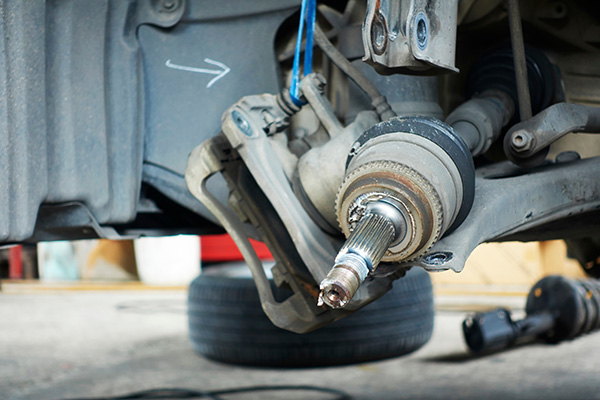
A bad CV axle does not always announce itself with one huge failure. More often, it starts with a clicking sound in a parking lot, a shake during acceleration, or grease splattered where it should not be. That little clue is easy to miss. CV axles and CV joints work every time the car moves, especially when you turn and accelerate at the same time. Once they start wearing, the symptoms usually follow a pattern. Catching that pattern early can help prevent a small axle concern from turning into a bigger drivability problem. What The CV Axle And CV Joint Do The CV axle transfers power from the transmission or differential to the wheels. The CV joints at each end allow that axle to keep spinning while the suspension moves and the wheels turn. That flexibility is the important part. Without the CV joints, the axle would bind every time you turned into a driveway or drove over a dip in the road. Inside each joint are metal parts packed with heavy grease. A rubber boot ... read more