A squeak over bumps has a way of sounding minor right up until it becomes a daily occurrence. You hear it pulling into a driveway, rolling over a speed bump, or crossing a rough patch of road at low speed. The car still drives well enough, so it is easy to shrug it off for a while.
Most of the time, though, that noise means a suspension part is drying out, wearing down, or starting to move more than it should.
Why Bumps Bring The Noise Out
A bump forces the suspension to compress and rebound in a way normal flat-road driving does not. That movement loads the bushings, mounts, links, and spring components all at once. If one of those parts has lost its cushioning or started rubbing dry, the squeak shows up right there.
That is why this kind of sound is useful. It tells you the problem is tied to suspension travel, not engine speed, not braking, and not tire rotation. The car is basically narrowing the search for you.
Sway Bar Bushings Are Frequent Trouble Spots
Sway bar bushings are one of the biggest causes of squeaking over bumps. Their job is simple: cushion the sway bar's movement and prevent it from rubbing harshly against its mounts. Once the rubber dries out, hardens, or begins to crack, that smooth movement turns into a squeak.
This usually starts small. Maybe it is only noticeable in the morning or over sharper bumps. Then it becomes one of those sounds you hear every time the suspension flexes. The good news is that this is often a very fixable problem when caught early.
Sway Bar Links Can Make Noise Too
Sway bar links are another common source. These links connect the sway bar to the suspension, and when their joints begin wearing out, they often start talking before they start clunking. A squeak over smaller bumps is sometimes the first stage.
That is one reason a suspension inspection is worth doing sooner rather than later. A noisy link today can become a looser, noisier front-end part later, and once the wear spreads, you may start feeling the problem in handling as well.
Upper Strut Mounts And Spring Seats Get Overlooked
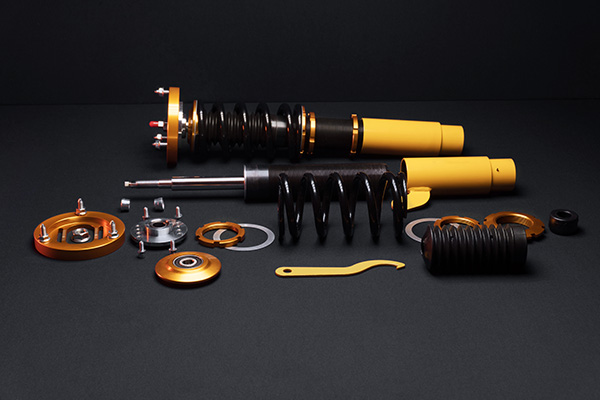
A lot of drivers assume all suspension noise comes from the lower front end, but the upper suspension points deserve just as much attention. Strut mounts and spring seats carry a lot of weight, and when the rubber in those areas gets older, the suspension starts making noise every time the body moves up and down.
This kind of squeak often sounds like it is coming from high in one front corner. It may be worse over driveway entrances or uneven pavement where the body twists a little. The car may still feel decent on the road, which is exactly why this one gets ignored for too long.
Control Arm Bushings Often Start Quietly
Control arm bushings usually do not begin with dramatic symptoms. More often, they start with a repetitive squeak over bumps, especially when the weather is cooler or the road is rougher. The rubber stiffens with age, small cracks form, and the movement that used to be cushioned starts making itself heard.
That sound matters because it is often the first warning. Later on, the same worn bushing may begin affecting alignment, steering feel, and tire wear. Catching it at the squeak stage is usually far easier than waiting for a full front-end complaint.
Sometimes The Squeak Comes From Nearby Parts
Not every bump squeak comes from the biggest suspension components. A few smaller parts can make almost the exact same kind of noise:
- Dry sway bar bushings
- Worn strut mounts
- Control arm bushings beginning to split
- Worn spring insulators
- Loose brake hardware
- Underbody shields rubbing when the chassis flexes
That is why guessing can get expensive. A sound from the left front corner does not automatically mean the left strut is bad. The source still needs to be confirmed.
The Pattern Usually Tells A Story
One of the most helpful parts of this kind of complaint is that the pattern often gives away a lot. If the squeak happens over every speed bump, sway bar components move higher on the list. If it is louder on one side, a single mount, link, or bushing may be the issue. If it is worse first thing in the morning, older rubber parts are often involved because cooler temperatures make them stiffer.
These little details are worth paying attention to. During regular maintenance, they can help narrow the inspection down much faster and keep the repair more focused.
Why It Usually Gets More Expensive If You Wait
Suspension squeaks rarely stay just squeaks. The same worn part keeps moving, keeps drying out, and keeps affecting the parts around it. Eventually, the noise often turns into looseness, clunking, uneven tire wear, or a car that just does not feel as solid as it used to.
That is why fixing it early is usually the better move. A quiet suspension is usually a healthy one. Once something starts squeaking every time the car goes over a bump, it is already telling you that one part of the system is wearing out.
Get Suspension Repair In California, With DRIVE AutoCare
If your car squeaks over bumps, DRIVE AutoCare in Solana Beach, CA, can inspect the suspension, pinpoint the source, and help you fix it before the problem turns into a larger front-end repair. You can visit one of our convenient California locations and have the issue checked while the repair is still in progress.
Bring it in before that small squeak becomes a much bigger suspension problem.