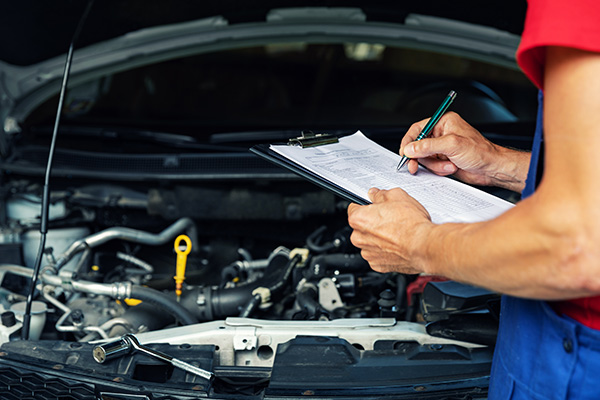
We have all seen it while driving down the interstate. A car parked on the narrow gravel shoulder, the hood propped open, a cloud of steam rising into the air, and a completely stressed-out driver waiting on the phone for a tow truck to arrive. It is a miserable situation that ruins your schedule, drains your wallet, and puts your safety at risk on a fast-moving highway.
When a vehicle breaks down on the road, it rarely happens completely out of the blue. Engines and electrical systems are remarkably communicative machines. Before a part fails entirely, it almost always leaves behind a trail of physical breadcrumbs that you can spot if you know where to look.
At our auto repair shop, we want to help you stay ahead of the tow truck. You do not need to be a professional mechanic or own an expensive toolbox to protect yourself. By spending just ten minutes performing these five vital checks today, you can catch major problems before they leave you stranded.
1. Test Your Battery Strength Before the Engine Cranks
Your battery is the initial spark plug for your entire commute, and a dead battery remains one of the top reasons drivers get stranded. While checking the battery might sound complicated, you can gather a lot of information just by looking at it.
Pop your hood and find the battery casing. Look closely at the metal terminals where the thick cables connect to the battery posts. If you see a crusty buildup of white, blue, or green powder, that corrosion is actively blocking the flow of electricity. It forces your starter to work twice as hard and prevents your alternator from fully recharging the battery while you drive. Wipe that away safely and make sure the cables are tightly secured to the posts. If your engine has been cranking slowly in the morning, or if your vehicle is still running on a battery that is more than three or four years old, it is trying to tell you that its lifespan is coming to an end.
2. Inspect the Lifeblood of Your Engine
Your engine relies on clean motor oil to lubricate hundreds of rapidly moving metal parts that slide against each other at thousands of revolutions per minute. Running out of oil or driving with oil that has turned into thick, black sludgewill cause your engine to lock up permanently.
Pull out your engine dipstick, wipe it completely clean with a paper towel, insert it all the way back into the tube, and pull it out a second time. Look at the oil level relative to the two small dots or lines at the tip of the metal blade. If the oil line sits below the minimum mark, your engine is running dangerously dry. Take a close look at the color and texture of the liquid on the towel as well. Healthy engine oil should look like a translucent, amber honey. If the fluid looks like thick, jet-black coffee or feels gritty between your fingertips, it has lost its ability to protect your internal engine components and needs to be changed immediately.
3. Check the Coolant Reservoir Level
An engine failure from overheating can destroy a vehicle in a matter of minutes, cracking the engine block or melting delicate internal seals. Your cooling system prevents this disaster by routing a specialized mixture of water and antifreeze through your engine to absorb excess heat.
Locate the clear plastic coolant overflow reservoir under your hood. You never want to open the actual radiator cap while the engine is hot, but you can safely look through the side of the plastic reservoir to check the fluid level. The liquid, which is usually a bright pink, orange, or green color, should sit comfortably between the minimum and maximum lines molded into the plastic. If the reservoir is completely bone dry, you likely have a slow leak in one of your rubber radiator hoses or a hairline crack in your radiator core that requires immediate professional evaluation.
4. Look Closely at Your Serpentine Belt
The serpentine belt is a long, winding loop of rubber that transfers mechanical power from your spinning engine crankshaft to your alternator, your power steering pump, and your water pump. If this single belt snaps while you are cruising down the highway, your car will lose power steering instantly, your battery will stop charging, and your engine will overheat within sixty seconds.
With the engine completely turned off, grab a flashlight and inspect the rubber surface of the belt. Look along the smooth side and turn your eyes to the grooved side that wraps around the metal pulleys.
Look for Physical Aging: If you spot deep cracks splitting across the rubber ribs, chunks of rubber missing from the edges, or a shiny, glazed appearance on the smooth side, the belt has become brittle from age and heat.
Listen to the Engine: A loud, high-pitched squealing sound when you first start your car or when you turn your steering wheel all the way to one side is a major warning that the belt is slipping or the tensioner pulley is failing.
5. Verify Your Tire Integrity and Pressure
Your tires are the only physical contact point between your vehicle and the asphalt, making them absolutely critical for your braking, steering, and overall stability at highway speeds.
Walk around your vehicle and check the inflation pressure using a reliable pocket gauge, making sure the numbers match the specification on the tire placard inside your driver's side door frame. While you are down there, look closely at the sidewalls for any strange bulges, bubbles, or deep gashes from hitting a pothole. A bubble in the rubber sidewall means the internal steel chords have snapped, creating a major weak spot that can easily trigger a sudden, explosive blowout when you hit highway speeds.
Let Us Give You Absolute Peace of Mind
Performing these five simple checks is your absolute best defense against the unexpected stress of a highway breakdown. However, catching a potential problem is only half the battle. If your inspections reveal a low fluid level, a cracked belt, or a weak battery, you need a team of professionals you can trust to get it fixed correctly.
Do not wait for a small, hidden issue to turn into a dangerous roadside emergency on your next long drive. Visit DRIVE AutoCare, with 2 locations in Solana Beach, CA, this week, or give us a call to schedule an inspection today.
We look forward to helping you keep your car out of the breakdown lane and moving safely down the road.