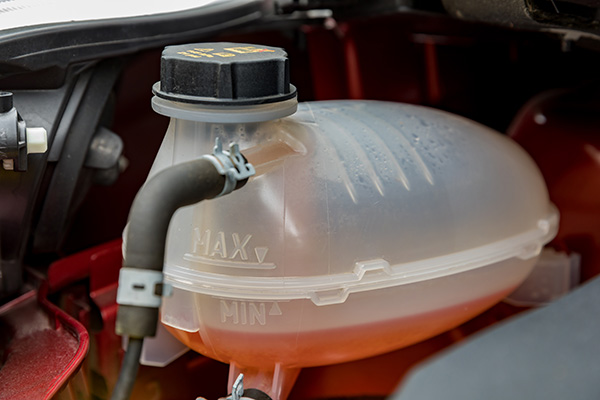
The coolant reservoir needs another small top-off, but the hoses look dry, and nothing is dripping beneath the radiator. Then a faint sweet smell returns after you park the car. With plastic covers and an underbody panel hiding much of the engine, a quick look from above reveals little.
A concealed water pump is one possibility, but nearby housings, pipes, and seals deserve the same attention. The useful evidence is where fresh coolant first appears, not where it finally drips. These five findings can justify looking behind the covers instead of continuing to refill the reservoir.
1. The Cold Coolant Level Keeps Dropping
Compare the reservoir level under the same conditions, with the engine fully cold and the vehicle parked level. Coolant expands when hot, so comparing a warm reading with yesterday's cold reading can suggest a loss that isn't there. Marking or photographing the cold level makes small, repeated changes easier to spot.
A consistent drop means coolant is leaving the system somewhere. A water pump seal can leak into a concealed area before enough fluid escapes to reach the ground. That doesn't make the pump guilty on its own. Radiator seams, hose connections, heater plumbing, and internal leaks remain possibilities until you trace the path. Never remove a cooling-system pressure cap while hot.
2. A Crusty Trail Starts at a Cover Opening
Dried coolant can collect along the bottom of a timing cover or at an opening near the pump. It may look chalky or carry the coolant's dye color. The color alone doesn't identify the component, especially when fluid has traveled across several surfaces before drying.
When tracing the leak, we work upward from the residue toward the first fresh wet point. A pump hidden behind timing components needs a different access plan from one mounted externally or beneath an intake assembly. Removing the correct cover can expose a weep opening, mounting gasket, or coolant pipe that wasn't visible during a basic under-hood check.
3. The Smell Returns After a Hot Shutdown
A small leak can become easier to notice after a drive, when the engine compartment is hot and coolant is still under pressure. Fluid reaching a warm surface can evaporate without forming a puddle. The smell may seem strongest near one side of the engine rather than at the reservoir.
Odor isn't a reliable way to identify the pump, but its timing helps decide how to test the system. Coolant spilled during recent service can also smell as it dries. Fresh residue that keeps returning, combined with an actual falling level, is stronger evidence of an ongoing leak than one brief smell after a top-off.
4. Coolant Reaches a Belt or Nearby Pulley
On an engine with a belt-driven pump, leakage can reach the belt area and be spread by rotating parts. A wet patch behind the cover, splash marks near a pulley, or contamination on a timing belt warrants closer attention. The belt's condition needs evaluation even after the leaking pump or seal is identified.
A chirp or bearing growl can accompany pump wear, but noise alone does not prove a leak. Tensioners and other accessories can sound similar. Electric pumps have no belt-driven pulley to check at all. Diagnosis has to follow the engine's layout instead of assuming every water pump sits beside the visible accessory belt.
5. The Undertray Is Wet While Visible Hoses Stay Dry
A lower engine shield can catch coolant and release it far from the source. The first driveway spot might therefore appear behind the engine even when the leak began higher up. Opening the undertray can reveal pooled coolant that never showed during a glance beneath the front bumper.
An inspection should include concealed joints rather than stopping at the accessible hoses. Correct pressure testing can help expose a small leak without waiting for overheating, although a cold test won't reproduce every heat-related fault. The system must be tested within its specified pressure limit. A pressure drop indicates a leak concern, but not its location on its own.
A Confirmed Leak Needs More Than Another Top-Off
Persistent active leakage needs repair, even if the temperature gauge has stayed normal. Once you confirm the source, the job may involve the pump, its mounting seal, or an adjacent fitting. On a timing-belt-driven installation, contaminated belts and related components require attention according to the engine's repair procedure.
Review coolant service during regular maintenance, using the required coolant rather than choosing by color. If temperature rises, steam appears, or cabin heat suddenly disappears while the engine runs hot, stop driving and arrange help. Don't wait for the reservoir to empty before treating the loss as more than a minor seep.
Get Water Pump Leak Diagnostics In Solana Beach, CA, With DRIVE AutoCare
DRIVE AutoCare can trace coolant loss and examine hidden pump areas at its two Solana Beach, CA, locations.
Contact us to schedule a cooling-system check and bring any notes about when the level drops or the smell returns.